My "Hopeamine"addiction
Mi adicción a la esperanza ✨

I’m not sure when it started, this feeling that it’d be alright in the end. Maybe it was when I decided to pack all my things into a giant suitcase and move thousands of miles and an ocean away from my family that I became addicted to having hope for a better future.
Gen Z is calling this “hopeamine,” a wordplay on “dopamine,” the hormone that activates joy. In the same way that scrolling on your phone can create a kind of negative dopamine addiction, hopeamine supposedly activates hope. So this week, I’d like us to jump into this world of relentless positivity for a few minutes.
No estoy segura de cuándo empezó esta sensación de que, al final, todo iba a salir bien. Tal vez fue cuando decidí meter todas mis cosas en una maleta gigante y mudarme a miles de kilómetros de mi familia. Quizás fue en ese instante que me volví “adicta” a tener esperanza en un futuro mejor.
La Gen Z lo llama “hopeamine”, un juego de palabras con “dopamina” la hormona que activa la felicidad y “hope (esperanza)”. De la misma manera en que pasar horas scrolleando en el teléfono puede crear una especie de adicción negativa a la dopamina, el “hopeamine” supuestamente activa la esperanza. Así que esta semana entremos en este mundo de adictos a la positividad por un ratito.
( bajen por la versión en español)
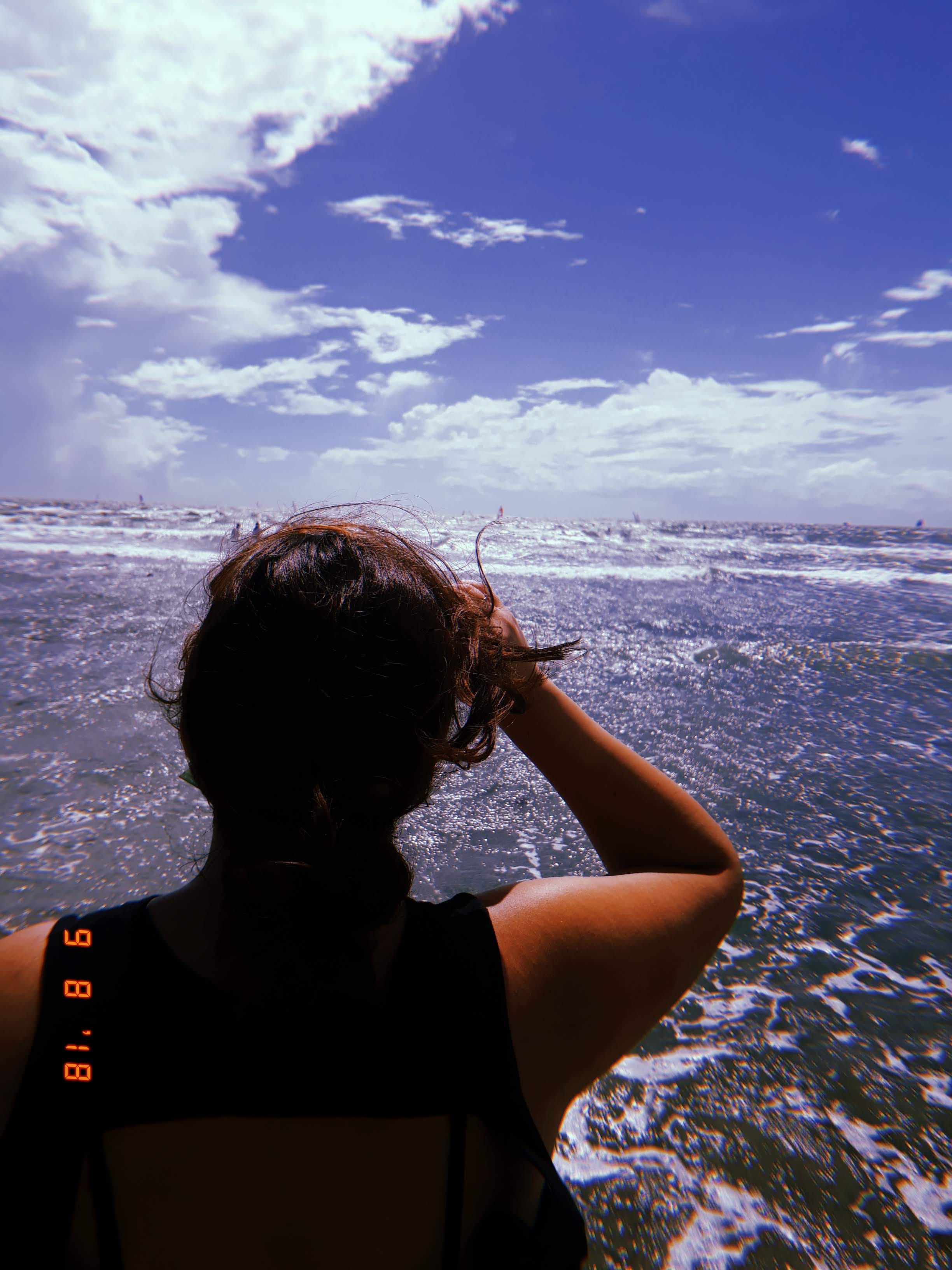
#HOPECORE
Now, hopeamine isn’t real, but if it were, wouldn’t it be nice? That instead of doom scrolling, you’d actively seek out positive visions of the future? The hopeamine trend is relatively new on social media, and mainly covers people talking about anticapitalist discourse, positive ecological futures like solarpunk and off-grid living, and utopian ideas around equality and quality of life.
If you’ve been following my journey, you know that I became a little obsessed with the idea of utopias back when I had my son in 2024. I couldn’t watch the news anymore because every day I would see another headline that meant the world was going to end.
This deeply troubled me because I was about to bring a child into the world and couldn’t reconcile with the fact that this world was clearly awful. It became difficult to imagine what kind of future I had brought him into.
But if that were true, where would we be as humans? We can’t very well immigrate to another planet just yet… so for me, my thinking became more about: what would this world be like if it were to become a utopia?
So instead of dystopian ranting and negative talk about the world, I started to look for hope in little places and things. I started with books, then shows, movies, and podcasts. First, I gave myself a research challenge to read utopian books, both old and new, to get a sense of what people who have hope for our planet are thinking.
My search started with the first “utopia.” Though he doesn’t use this language to describe the place, Plato describes two interesting “utopias” across his works.
Plato’s Republic plays the thought experiment of a kind of utopia called Magnesia, run by philosopher-kings with no property or money of their own. Plato imagined that philosophy and art would be key to a utopian future, but also imagined that human nature is what it is, and that Magnesia would inexorably become a dystopia.
He also discusses Atlantis, the lost empire, as a kind of utopia, filled with abundance. Supposedly, Atlantis, the legendary maritime civilization buried in a volcanic eruption never to be found again, was punished by the gods for wanting to expand their territory.
They had everything, they wanted more, and so they lost everything.
Sound familiar?
The next work I read was Thomas More’s Utopia, the first book to use the word, which comes from the Greek for “no place,” as in: this place does not exist. The most interesting part of this utopia is the notion that class no longer exists. There is no money, no private property; all goods and food are shared and stored in communal warehouses. Everyone is taught trades and agriculture to collectively contribute to society, and everyone wears simple clothes. Luxury doesn’t exist in utopia. Everyone works, but only a few hours a day. Leisure is the thing they love and do most.
I then stumbled upon the first French sci-fi utopia: L’An 2440, rêve s’il en fut jamais, a novel which imagined a man waking up in the year 2440, in a secular, kingless France, written just 18 years before the French Revolution.
There were quite a few utopian texts in French, but my favorite was The Conquest of Bread by Russian anarchist Peter Kropotkin in 1892. His whole argument was that we already had all the essentials and necessities for survival; they should just be distributed evenly among the population.
This fact was true then, and is even more true now.
Mija Seeks Utopia
What I gathered from this first phase of research was that governance (politics), how people fill their days (work), how they’re educated (culture), and how they get their food (agriculture) are essential to the question of utopia.
Of course, all this was great; it took me away from my phone for a few months and inspired me during those newborn months of sleeplessness, but more importantly, it made me realize four things:
Most, if not all, of these books were written by male European aristocrats with the free time to think about these questions.
Utopia, and its imaginings, can open up possibilities for the general public. Some of these works sparked revolutions that started real change, the kind of change that once felt like fiction.
The fictional utopias from the past are all relative to the authors’ experience. Because so many of these works were written from one kind of POV, an analytical, philosophical one that lives in the spaces of wealth and power, what’s missing is the heart and the reality of a person of an average social class living in that world.
I should write one.
And so began my two-year dive into modern, religious, ecological, and science-fiction questions around utopia.
Until now, I’ve kept my findings to myself. I have been that friend at dinner parties that asks, what would utopia be like for you?
But there’s so much to this question that I’ve decided to work through it here, and share how my readings and reactions to these things have inspired my novel.
So this is part 1 of a series I’m going to call: Mija Seeks Utopia.
I’m approaching these questions not as a philosopher or political theorist, but as a mother, an immigrant, and a writer trying to imagine a future worth inheriting.
If you want to step into utopia with me for the next couple of weeks, subscribe and share, and who knows, maybe you too will become a hopeamine addict, like me.
Thanks for reading,
Con cariño,
Lory
aka MIJA
#ELHOPECORE
Ahora, el hopeamine no es real, pero si lo fuera, ¿no sería lindo? Que en vez de hacer doomscrolling, buscarás activamente visiones positivas del futuro.
La tendencia del hopeamine es relativamente nueva en redes sociales y gira principalmente alrededor de conversaciones sobre anticapitalismo, futuros ecológicos positivos como el solarpunk y la vida off-grid, además de ideas utópicas: todos con casa y comida, etc.
Si has seguido mi historia, sabes que me obsesioné un poco con la idea de las utopías cuando tuve a mi hijo en el 2024. Ya estaba harta de las noticias. Todos los días aparecía otro titular anunciando, de alguna forma, el fin del mundo. Estaba a punto de traer un hijo al mundo y no lograba reconciliarme con la idea de que este mundo fuera tan terrible.
Empezó a ser difícil imaginar qué tipo de futuro le había dado.
Pero si eso fuera verdad, ¿qué nos quedaría de nuestra humanidad? Todavía no podemos emigrar a otro planeta… así que empecé a pensar de otra manera: ¿se puede imaginar que este mundo se pueda convertir en una utopía?
Entonces, en vez de perderme en discursos distópicos y conversaciones negativas sobre el mundo, empecé a buscar esperanza en el contenido que estaba mirando, leyendo y escuchando.
Primero, me puse el reto de leer libros utópicos, antiguos y contemporáneos, para entender qué piensan las personas que tienen esperanza en nuestro planeta.
Mi búsqueda comenzó con la primera “utopía”. Aunque Platón no usa exactamente esa palabra, describe dos “utopías” interesantes a lo largo de sus obras.
En La República, Platón plantea una especie de utopía llamada Magnesia, gobernada por filósofos-reyes sin propiedad privada ni dinero propio. Platón imaginaba que la filosofía y el arte serían esenciales para un futuro utópico, aunque también pensaba que la naturaleza humana es lo que es, y que Magnesia inevitablemente terminaría convirtiéndose en una distopía.
También habla de Atlantis, el imperio perdido. Atlantis era una utopía llena de abundancia. Supuestamente, la legendaria civilización marítima enterrada por una erupción volcánica, fue castigada por los dioses por querer expandir su territorio.
Lo tenían todo, quisieron más, y por eso lo perdieron todo.
¿Les suena familiar?
La siguiente obra que leí fue Utopía de Tomás Moro, el primer libro en usar la palabra, que viene del griego y significa “ningún lugar”, osea, este lugar no existe. Lo más interesante de esta utopía es la idea de que las clases sociales dejan de existir. Ningún estrato 50 aqui! Es más, no hay dinero ni propiedad privada; todos los bienes y alimentos son compartidos y almacenados en depósitos comunitarios. Todo el mundo aprende oficios y agricultura para contribuir colectivamente a la sociedad, y todos usan ropa sencilla. El “lujo” no existe en Utopía. Todos trabajan, pero solo unas pocas horas al día. En fin, tienen todo lo que necesitan y disfrutan de la vida.
Luego me encontré la primera utopía francesa de ciencia ficción: L’An 2440, rêve s’il en fut jamais, una novela que imagina a un hombre despertando en el año 2440, en una Francia secular y sin reyes, escrita apenas 18 años antes de la Revolución Francesa.
Encontré muchos textos utópicos en frances, pero mi favorito fue La conquista del pan del anarquista ruso Peter Kropotkin, publicado en 1892. Su argumento principal era que ya teníamos todos los recursos y necesidades básicas para sobrevivir; simplemente debían distribuirse de manera equitativa entre la población.
(Eso era cierto en 1892, y aún más cierto ahora.)
Mija Seeks Utopia
Lo que saqué de esta primera etapa de investigación fue que la gobernanza (la política), cómo la gente llena sus días (el trabajo), cómo se educa (la cultura) y cómo obtiene sus alimentos (la agricultura) son esenciales para la pregunta de la utopía.
Claro, todo esto estuvo muy bien; me alejó del teléfono por unos meses y me inspiró durante esos meses de mama primeriza, pero más importante aún, me hizo darme cuenta de cuatro cositas muy importantes:
La mayoría, si no todos, de estos libros fueron escritos por aristócratas europeos, hombres con el tiempo libre para hacerse estas preguntas.
La utopía, y la posibilidad de imaginarla, pueden abrir nuevas posibilidades para la gente. Algunas de estas obras inspiraron revoluciones que produjeron cambios reales, cambios que alguna vez parecieron ficción.
Las utopías ficticias del pasado siempre están relacionadas con la experiencia de sus autores. Como muchas de estas obras fueron escritas desde un único punto de vista, uno analítico y filosófico que vive en espacios de riqueza y poder, lo que falta es el corazón, y la realidad de una persona de clase media viviendo dentro de ese mundo.
Yo debería escribir una.
Y así comenzó mi inmersión de dos años en preguntas tecnológicas, religiosas, ecológicas y de ciencia ficción para encontrar mi utopía.
Hasta ahora, me había guardado todo esto para mí. He sido esa amiga en las cenas que pregunta: ¿cómo sería tu utopía?
Pero hay tanto dentro de esta pregunta que decidí empezar a explorarla aquí, y compartir cómo mis lecturas y reacciones a estas ideas han inspirado mi novela.
Así que esta es la primera parte de una serie que voy a llamar: Mija Seeks Utopía.
Estoy acercándome a estas preguntas no como filósofa ni teórica política, sino como madre, inmigrante y escritora (writer) intentando imaginar un futuro que valga la pena heredar.
Si quieres entrar conmigo a esta utopía durante las próximas semanas, suscríbete y comparte este texto, y quién sabe, tal vez tú también te conviertas en una adicta al hopeamine, como yo.
Gracias por leer,
Con cariño,
Lory
aka MIJA
Love the history very inspiring